In This Guide
- What Is a Title Register?
- Title Register vs Title Plan
- How a Title Register Is Structured
- Section A — The Property Register
- Section B — The Proprietorship Register
- Section C — The Charges Register
- Classes of Title
- How to Get a Copy of Your Title Register
- Why the Title Register Matters
- Frequently Asked Questions
When a property is registered with HM Land Registry, it’s assigned a unique title number and two key documents are created: the title register and the title plan. Together, these form the official record of ownership for that property.
The title register is the written record. It contains the names of the legal owners, describes the property, records the class of title, and details any mortgages, restrictions, rights of way, or covenants that affect the land. If you’re buying, selling, remortgaging, or simply trying to understand what’s registered against your property, the title register is where you’ll find the answers.
This guide explains what a title register contains, how it’s structured, and how to read each section — so you can make sense of your own register or understand what you’re looking at during a property transaction.
Key Takeaway: The title register is divided into three sections — A (Property Register), B (Proprietorship Register), and C (Charges Register). Not every register has a Section C. Together with the title plan, these documents provide the complete official record of a registered property in England and Wales.
1. What Is a Title Register?
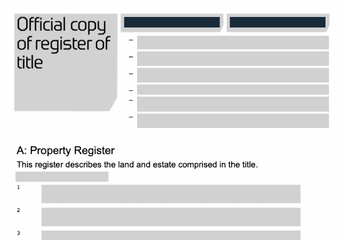
A title register — formally known as the “Official Copy of Register of Title” — is the legal record of a registered property held by HM Land Registry. It’s an electronic document that records:
- A description of the property (usually the postal address)
- Whether the property is freehold or leasehold
- The names and addresses of the legal owners (proprietors)
- The class of title granted by the Land Registry
- The price paid for the property (if recorded)
- Any rights that benefit the property, such as rights of way
- Any burdens on the property — mortgages, restrictive covenants, easements, and other third-party interests
- Any restrictions on the owner’s ability to deal with the property
Every registered property in England and Wales has a title register. Approximately 87% of land in England and Wales is now registered with HM Land Registry. For the remaining unregistered properties, the original title deeds serve as the record of ownership instead.
The title register is a public document — anyone can request a copy for any registered property, not just the owner. This is one of the fundamental principles of the land registration system: transparency of ownership.
2. Title Register vs Title Plan
People often confuse the title register and the title plan, but they serve different purposes:
| Title Register | Title Plan |
|---|---|
| Written record of ownership, rights, and restrictions | Map showing the property’s extent and boundaries |
| Contains names, addresses, mortgages, covenants | Shows the property edged in red on Ordnance Survey mapping |
| Records the class of title and any restrictions | May show coloured areas referenced in the register |
| Text document | Visual/map document |
| £7 electronic / £11 postal | £7 electronic / £11 postal |
While it’s useful to read them separately, the title register and title plan are designed to work together. Entries in the register often refer to areas shown on the title plan — for example, “the land edged blue on the title plan” or “the area shaded green”. To fully understand your property’s legal position, you need both documents.
For more on title plans and what the boundary lines actually mean, see our guide on how to find your land boundaries.
3. How a Title Register Is Structured
Every title register follows the same format. At the top, you’ll find the header information:
- Title Number — the unique reference for this registered property (e.g., WYK123456)
- Edition Date — the date the register was last updated. Any change to the register — a sale, new mortgage, restriction, or notice — generates a new edition
Below the header, the register is divided into three sections, universally referred to as A, B, and C:
- Section A — Property Register: Describes the property and any rights it benefits from
- Section B — Proprietorship Register: Names the owners and records any restrictions on their power to deal with the property
- Section C — Charges Register: Records mortgages, covenants, easements, and other burdens affecting the property
Not every register has a Section C. If there are no mortgages, charges, or third-party interests registered against the property, Section C simply won’t appear.
Each entry within the register is dated — the date in brackets indicates when that particular entry was added. The order of entries matters, particularly in Section C, because earlier entries take priority over later ones.
4. Section A — The Property Register
The Property Register describes the land included in the title. The first entry will always contain:
- Whether the property is freehold or leasehold
- The postal address (where one exists)
- A reference to the title plan — usually worded as “the land shown edged with red on the plan of the above title”
- The date of first registration
If the property benefits from any rights — such as a right of way over a neighbour’s land, a right to run drainage pipes through adjoining property, or a shared access — these will be recorded here as additional entries.
Leasehold Properties
For leasehold properties, Section A will also contain the short particulars of the lease — the date of the lease, the parties involved, the term (length), and any ground rent payable. This is essential information for anyone buying a leasehold property, as the remaining term and ground rent can significantly affect the property’s value and mortgageability.
Section A may also note where land has been removed from the title — for example, where part of the original property has been sold off and registered under a new title number.
5. Section B — The Proprietorship Register
The Proprietorship Register records who owns the property and any limitations on their ability to deal with it. This is the section most people turn to first.
It contains:
- Class of title — the level of guarantee HM Land Registry provides (see Classes of Title below)
- Names and addresses of the proprietors — the legal owners. Up to four individuals can be registered as joint proprietors
- Date of registration — when the current owners were registered (usually a few weeks after completion)
- Price paid — recorded for most properties purchased after April 2000
Restrictions
Section B is also where you’ll find any restrictions registered against the title. A restriction limits the owner’s ability to deal with the property unless certain conditions are met. Common examples include:
- Joint proprietor restrictions — preventing one owner from selling without the other’s involvement. This is standard on jointly owned properties.
- Mortgage lender restrictions — requiring the lender’s consent before certain transactions can be completed
- Indemnity covenant restrictions — requiring a new owner to enter into a covenant to observe existing obligations on the land
- Court order restrictions — preventing dealings with the property as directed by a court, for example during divorce proceedings or bankruptcy
Restrictions are important to understand early in any property transaction. If a restriction exists, the conditions it specifies must be satisfied before HM Land Registry will register a new transfer, lease, or charge.
6. Section C — The Charges Register
The Charges Register records interests that burden the property — things that affect how the land can be used or that give third parties rights over it. Not every title register has a Section C; it only appears when there are relevant entries to record.
Common entries in Section C include:
- Mortgages (legal charges) — recorded when a lender has a secured interest in the property. The register won’t show the amount borrowed, only the lender’s name and the date the charge was registered. The order of charges matters — earlier charges have priority over later ones.
- Restrictive covenants — obligations that limit what the owner can do with the land. For example, a covenant not to build above a certain height, not to use the property for business purposes, or not to erect fences above a specified level.
- Positive covenants — obligations requiring the owner to do something, such as maintain a shared boundary wall or contribute to the upkeep of a private road.
- Easements (as burdens) — rights that others hold over the property. For example, a neighbour’s right of way across your garden, or a utility company’s right to access and maintain pipes running under your land.
- Notices — protecting various interests, including home rights notices (giving a spouse or civil partner occupation rights), contracts for sale, or charging orders imposed by courts.
- Leases — where the property is subject to a lease granted to a tenant, details will appear here or in a schedule of leases.
When entries in the Charges Register refer to specific documents — such as the original conveyance containing the covenants — you can request a copy of that filed document from HM Land Registry (£7 electronic, £11 postal) using form OC2.
7. Classes of Title
When HM Land Registry first registers a property, it grants a class of title based on the strength of the evidence of ownership provided. The class of title is recorded in Section B and determines the level of guarantee the state provides.
There are six classes of title — three for freehold and three for leasehold:
Freehold
- Absolute — the strongest class. The owner’s title is guaranteed by the state, subject only to entries on the register and overriding interests. This is the most common class for freehold properties.
- Qualified — rare. Granted where there’s a specific defect in the title that the Land Registry has identified. The guarantee is subject to that defect.
- Possessory — granted where the applicant’s claim is based on possession (adverse possession) or where original deeds have been lost. The guarantee doesn’t cover issues arising before the date of registration.
Leasehold
- Absolute — the strongest class for leasehold. Guarantees both the lease and the landlord’s right to grant it.
- Good Leasehold — guarantees the lease itself but not the landlord’s right to have granted it. Common where the freehold title hasn’t been examined.
- Qualified / Possessory — as with freehold, granted where there are specific defects or the claim is based on possession.
Worth Knowing: The vast majority of residential properties have absolute title. If you see “qualified” or “possessory” on a register, it’s worth taking legal advice — some mortgage lenders won’t lend against anything less than absolute title.
8. How to Get a Copy of Your Title Register
Anyone can obtain a copy of the title register for any registered property in England and Wales. You don’t need to be the owner.
There are two ways to access it:
Online — GOV.UK (Recommended)
Visit the Search for Land and Property Information service on GOV.UK. You can search by property address or title number. An electronic copy of the title register costs £7. The title plan is a separate £7 if you want both.
By Post
Complete form OC1 and send it to HM Land Registry with a fee of £11 per document. Postal copies take longer to arrive and cost more — the electronic route is faster and cheaper.
Avoid Third-Party Resellers: Many websites repackage official Land Registry data at inflated prices — sometimes charging £20 or more for a document that costs £7 from GOV.UK. Always check that the URL ends in .gov.uk before paying. See our guide on the recent HM Land Registry fee increase for more detail on current costs.
9. Why the Title Register Matters
The title register is the single most important document in any property transaction. It serves different purposes for different people:
For Buyers
The register confirms who you’re buying from, whether they have the right to sell, and what restrictions, covenants, or charges come with the property. Your solicitor will examine the register as part of the conveyancing process and raise enquiries on anything that could affect your use or enjoyment of the property.
For Sellers
An up-to-date register is essential for a smooth transaction. If details are outdated — for example, a former owner’s name still appears, or a discharged mortgage hasn’t been removed — it can cause delays. It’s worth checking your register before putting your property on the market.
For Solicitors & Conveyancers
The register is the foundation of due diligence. It reveals mortgages that need to be discharged, restrictions that must be satisfied, covenants that need to be disclosed, and rights that need to be protected. Where the register references filed documents, these will need to be examined too.
For Mortgage Lenders
Lenders use the register to assess risk. They need to confirm clear title, check for prior charges that would take priority over their mortgage, and ensure there are no restrictions that could prevent repossession and sale if the borrower defaults.
Where entries on the register reference specific areas on the title plan — for example, land subject to a right of way or an area excluded from the title — a Land Registry-compliant plan may be needed to clarify the position for the transaction.
Need a Land Registry Plan?
At Towers Richardson, we’ve been preparing Land Registry-compliant plans since 1994 with a 100% acceptance rate. If your property transaction requires a new plan — whether it’s a title plan, lease plan, transfer plan, or developer plan — we can help.
Plans from £115 with 24-hour turnaround as standard.
📧 info@towers-richardson.co.uk
📞 01226 885040
💬 WhatsApp: 07543 434048
Or request a free quote online — we respond within 1 hour during business hours.
Frequently Asked Questions
What is a title register?
A title register is the official written record of a registered property held by HM Land Registry. It records who owns the property, describes the land, and details any mortgages, restrictions, rights of way, or covenants that affect it. It is divided into three sections: A (Property Register), B (Proprietorship Register), and C (Charges Register).
How much does a title register cost?
An official copy of a title register costs £7 when ordered electronically through the GOV.UK search service, or £11 by post. The title plan is a separate document at the same price. These fees were updated on 9 December 2024.
What is the difference between a title register and title deeds?
Title deeds are the original paper documents (conveyances, transfers, leases) that recorded property transactions before electronic registration. When a property is registered with HM Land Registry, the information from the deeds is recorded on the title register and title plan, which become the official record. For registered properties, the title register has replaced the need to rely on the original deeds for most purposes — though the deeds can still contain useful detail, particularly about boundaries.
Can anyone access a title register?
Yes. Title registers are public documents. Anyone can request a copy of the register for any registered property in England and Wales — you don’t need to be the owner or have any connection to the property. This is a fundamental principle of the land registration system.
What are the three sections of a title register?
Section A (Property Register) describes the property and any rights it benefits from. Section B (Proprietorship Register) names the owners, records the class of title, and lists any restrictions on their power to deal with the property. Section C (Charges Register) records mortgages, covenants, easements, and other burdens — it only appears if there are relevant entries.
What does “absolute title” mean on a title register?
Absolute title is the highest class of title granted by HM Land Registry. It means the state guarantees the owner’s title, subject only to entries on the register and any overriding interests. It’s the most common class for both freehold and leasehold properties and is the class that mortgage lenders typically require.
What does it mean if there is no Section C on my title register?
If your title register has no Section C (Charges Register), it means there are no registered mortgages, charges, covenants, or other third-party interests recorded against your property. This is a positive sign — it typically means the property is mortgage-free with no registered burdens.
How do I update my title register?
Changes to the title register are made by submitting an application to HM Land Registry — usually through a solicitor or conveyancer. Common updates include recording a change of name, removing a discharged mortgage, adding or removing a proprietor, or noting a new restriction. Each application has a separate fee, and some changes require supporting documentation.