At Towers Richardson, we often receive queries about HM Land Registry’s contact details and services. To make things easier for our clients, we have compiled this guide on all the different ways of contacting HM Land Registry. If you need help with Land Registry plans for your land or property, we are here to assist.
HM Land Registry’s trained customer support caseworkers can assist you with a variety of queries by telephone.
Customer Support Centre
English language:0300 006 0411
Welsh language:0300 006 0422
Opening hours: Monday to Friday (excluding Bank Holidays), 8am to 4.30pm.
The quietest time to call is between 8am and 9am. To maintain customer service and quality standards, calls may be recorded.
When you call, you will hear a list of menu options. Select the appropriate option to be directed to someone who can help with your specific query. Full details of the phone menu options are available on GOV.UK.
Specialist Phone Lines
For specific types of enquiry, HM Land Registry operates dedicated phone lines:
Local Land Charges
0300 006 0444
Bankruptcy Enquiries
0300 006 6107
Data Services
0300 006 0478
Land Charges
0300 006 6616
For information about reporting fraud or protecting your property, call 0300 006 0478 or use the Property Alert service.
Online Contact Form
If you prefer not to call, you can contact HM Land Registry through their online contact form. Select from a series of options to help route your enquiry to the right person.
Submit an Enquiry Online
Use the contact form for general enquiries, to report an error, or if you cannot find answers online.
HM Land Registry aim to reply on the same day where possible for urgent enquiries.
Please note that HM Land Registry cannot accept messages marked as private and confidential or in confidence.
Online Support Forum
HM Land Registry also operates an online support forum where you can ask questions or find answers to general queries. You can search for an existing thread that covers the information you need, or start your own.
The support forum is monitored for urgent enquiries and can be a useful alternative to calling, particularly for non-time-sensitive questions.
HM Land Registry’s Head Office is located at its Croydon office. The IT department and Land Charges Department are based at the Plymouth office. Note that these are operational offices — all postal correspondence should still be sent to the Citizen Centre address in Gloucester shown above.
Application Processing Times
If you want to know how long your application might take to complete, HM Land Registry publishes current processing times on their website. Timescales vary depending on the type of application and its complexity.
HM Land Registry carries out regular maintenance to their online services, typically on Sundays between 8am and 2pm. During these periods, services such as the portal and Business e-services may be unavailable.
If you are unhappy with your experience of HM Land Registry, you can make a formal complaint. They will take steps to put things right wherever possible.
To provide positive feedback or suggest improvements, use the HMLR feedback form.
Need a Land Registry Plan?
Towers Richardson prepare compliant Land Registry plans for solicitors and property professionals across England and Wales. 100% HMLR acceptance rate since 1994.
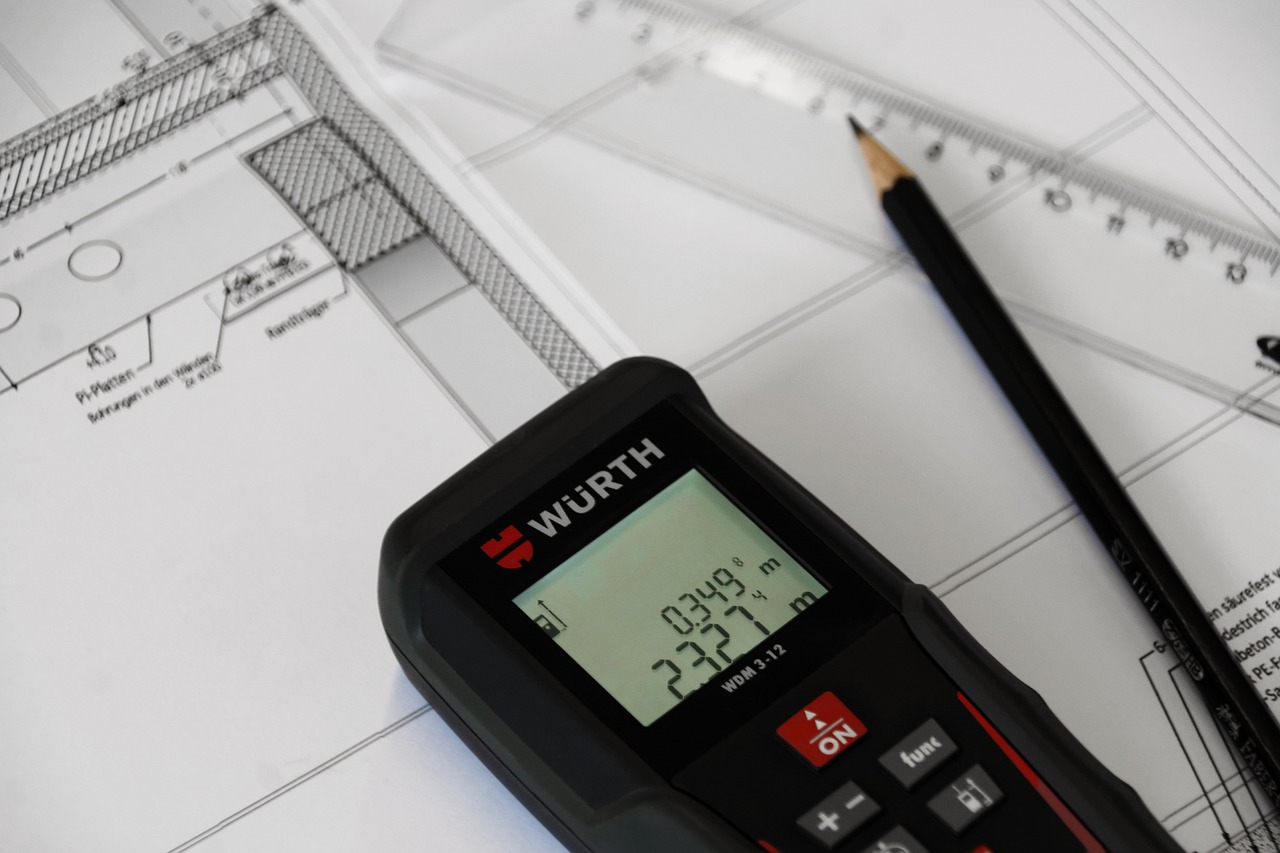
A laser measure is one of the most important tools in property surveying. Whether you are measuring internal room dimensions for a lease plan, checking the extent of a building for a title plan, or surveying a commercial property for a floor layout, a reliable laser measure delivers the speed and accuracy that professional plan preparation demands.
In this guide, we look at the different types of laser measure available, explain how they are used in property surveying, highlight the features that matter most for producing Land Registry-compliant plans, and share what we have learned from using these tools on site for over 30 years.
From our experience: At Towers Richardson, we use professional-grade laser measure devices on every measured survey we carry out. The accuracy of the laser measure directly affects the accuracy of the finished plan — which is why choosing the right tool and knowing how to use it properly matters so much.
What Is a Laser Measure?
A laser measure — also known as a laser distance meter or laser rangefinder — is a handheld device that calculates distance by emitting a laser beam at a target and measuring the time it takes for the beam to return. The result is displayed instantly on a digital screen, giving you an accurate measurement in seconds.
Modern laser measure devices can record distances from around 0.05 metres up to 200 metres or more, depending on the model. Most professional units are accurate to within 1 to 2 millimetres, which is more than sufficient for the vast majority of property surveying tasks.
For property professionals, the laser measure has largely replaced the traditional tape measure for internal surveys. It is faster, more accurate over longer distances, and can be operated by a single person — making it an essential tool for anyone carrying out measured surveys for lease plans, floor plans and building layouts.
How Laser Measures Are Used in Property Surveying
In the context of property surveying and plan preparation, a laser measure is used for several key tasks.
Measured Surveys for Lease Plans
When preparing a lease plan for HM Land Registry, detailed floor plans showing the internal layout of the property are required. A laser measure allows the surveyor to quickly and accurately record room dimensions, wall thicknesses, corridor widths and the positions of doors and windows. These measurements are then used to produce scaled floor plans in CAD software.
Checking Building Dimensions for Title Plans
While title plans are primarily based on Ordnance Survey mapping data, there are situations where a surveyor needs to verify building dimensions on the ground — for example, where a new extension does not yet appear on the OS map. A laser measure provides a fast way to check these measurements on site.
Commercial Property Surveys
Commercial properties — offices, retail units, warehouses and industrial premises — often require detailed measured surveys for lease plans, floor area calculations and property management purposes. A laser measure is the primary tool used for capturing these measurements efficiently.
Development Site Surveys
On development sites, a laser measure can be used to check plot dimensions, building setbacks and the positions of key features. While larger-scale site surveys typically use GPS and total station equipment, a laser measure is invaluable for quick on-site checks and internal measurements.
Types of Laser Measure
There are several categories of laser measure on the market. The right choice depends on what you are using it for and the level of precision you need.
Point-and-Shoot Laser Measures
These are the most common type. You point the device at the target surface, press a button, and the distance appears on the screen. Most models in this category have a range of 20 to 60 metres, which is sufficient for measuring rooms and internal spaces. They are compact, affordable and easy to use, making them a good starting point for basic property measurement tasks.
Professional Laser Distance Meters
Designed for surveyors, construction professionals and architects, these devices offer longer ranges (typically 100 to 200 metres), higher accuracy (often ±1.0 mm) and additional functions such as area calculation, volume calculation, indirect height measurement and Pythagoras functions. Professional models from manufacturers such as Leica, Bosch and Stabila are widely used in property surveying.
Bluetooth-Enabled Laser Measures
Many modern laser measure devices include Bluetooth connectivity, allowing you to send measurements directly to a smartphone, tablet or laptop. This is particularly useful when working with survey apps or CAD software on site, as it reduces the risk of transcription errors and speeds up the data capture process.
Laser Measures With Camera Viewfinders
For outdoor use or long-range measurements where the laser dot becomes difficult to see, some models include a built-in camera with a digital viewfinder. This allows you to see exactly where the laser is pointing on screen, even at distances of 100 metres or more. These are useful for surveying large buildings, facades and open sites.
Laser Levels With Distance Measurement
Some devices combine laser measuring with laser levelling functions in a single unit. While these are more commonly used in construction for setting out levels and alignments, they can be useful for surveyors who need both measuring and levelling capability on the same site visit.
Practical tip: For property surveying and lease plan preparation, a professional laser distance meter with Bluetooth is the best all-round choice. The Bluetooth function saves significant time when you are recording dozens of measurements in a single survey, and the professional accuracy ensures your finished plans are reliable.
Key Features to Look For
If you are choosing a laser measure for property surveying work, the following features are worth prioritising:
Accuracy of ±1.5 mm or better — professional surveying demands precision, and this level of accuracy ensures your measurements translate reliably into scaled plans
Range of at least 60 metres — sufficient for most internal and external property measurements, though 100+ metres is better for commercial and outdoor work
Bluetooth connectivity — allows direct transfer of measurements to your phone, tablet or laptop, reducing manual errors
Area and volume calculation — built-in functions that save time when surveying rooms and calculating floor areas
Indirect measurement (Pythagoras function) — useful for measuring heights and distances that cannot be reached directly
Robust build quality — a rubberised casing and IP54 dust and water protection are essential for site use
Clear digital display — a backlit screen with large, readable digits makes a difference when working in dim or bright conditions
Measurement from back edge — the ability to measure from the back of the device (rather than the front) is important when measuring into corners
Need a Measured Survey or Lease Plan?
We carry out professional measured surveys using calibrated laser measure equipment. 100% HMLR acceptance rate on every plan.
The traditional tape measure is still a useful tool, but for professional property surveying it has largely been replaced by the laser measure. Here is how they compare:
Feature
Laser Measure
Tape Measure
Accuracy
±1.0 to ±1.5 mm (professional models)
±1 to ±3 mm (depends on technique)
Range
Up to 200+ metres
Typically 5 to 8 metres
One-person operation
Yes — point and shoot
Often requires two people for longer distances
Speed
Instant readings
Slower, especially over longer distances
Data transfer
Bluetooth to phone, tablet or CAD
Manual recording only
Curved surfaces
Not suitable
Better for curved or irregular surfaces
Cost
£50 to £500+ depending on model
£5 to £30
In practice, most surveyors carry both. A laser measure handles the vast majority of measurements, while a short tape measure is useful for small details, curved surfaces and situations where a flat surface to reflect the laser is not available.
How Accurate Is a Laser Measure?
The accuracy of a laser measure depends on the model, the conditions and how it is used. Professional-grade devices are typically accurate to within ±1.0 to ±1.5 mm over their full range. Entry-level consumer models may be accurate to within ±2.0 to ±3.0 mm.
Factors That Affect Accuracy
Several factors can influence the accuracy of a laser measure reading:
Target surface — the laser works best against flat, solid surfaces. Rough, dark or highly reflective surfaces can affect the reading
Bright sunlight — strong ambient light can make the laser dot difficult to see and may reduce accuracy at longer distances
Temperature extremes — very hot or cold conditions can affect the internal electronics of the device
Obstructions — dust, rain or obstacles in the laser path will give incorrect readings
Reference point — you need to know whether the device is measuring from its front edge or back edge, and set it accordingly for the situation
For property surveying, the accuracy of a good-quality laser measure is more than sufficient. The tolerances involved in producing lease plans and floor plans are well within the capabilities of professional devices, provided they are used correctly and maintained properly.
Common Mistakes When Using a Laser Measure
Even with a reliable laser measure, errors can creep in if the device is not used carefully. Here are the most common mistakes we see:
Measuring to the wrong surface — if the laser hits a door frame, skirting board or piece of furniture instead of the wall, the reading will be wrong
Not checking the reference point setting — most devices can measure from the front or back edge, and selecting the wrong one adds or subtracts the length of the device itself
Forgetting to account for wall thickness — when measuring between rooms, you need to add the wall thickness to get the overall building dimension
Taking readings at an angle — the laser must be perpendicular to the target surface for an accurate distance reading, as measuring at an angle gives a longer result
Not recording measurements systematically — on a complex survey with dozens of readings, it is easy to lose track of which measurement relates to which room or dimension
Relying on a single measurement — good practice is to take at least two readings for each dimension and check they agree before recording the measurement
These are basic errors, but they can lead to inaccurate floor plans and, in the worst case, plans that do not reflect the true layout of the property. On a lease plan submitted to HM Land Registry, accuracy matters — an incorrect plan can lead to disputes about the extent of the demised premises.
What We Use at Towers Richardson
At Towers Richardson, we use professional-grade laser measure devices on every measured survey. Our equipment is calibrated regularly and maintained to ensure consistent accuracy across all of our work.
We combine laser measure data with professional CAD software and licensed Ordnance Survey mapping to produce plans that meet HM Land Registry standards under Practice Guide 40. The accuracy of our laser measure equipment is a critical part of that process.
Here is what we offer:
Professional measured surveys — using calibrated laser measure equipment for accurate room dimensions and building layouts
Lease plans — detailed floor plans showing the demised area, communal spaces and access routes, prepared for HMLR registration
Title plans and transfer plans — based on licensed OS data and verified with on-site measurements where needed
100% HMLR acceptance rate — every plan is checked against Practice Guide 40 before delivery
Fast turnaround — most plans delivered within 24 to 48 hours, with same-day options available
Nationwide coverage — we carry out measured surveys and prepare plans across England and Wales
30+ Years. 100% Acceptance Rate.
Trusted by solicitors, developers and property professionals across England and Wales since 1994.
A laser measure is a handheld device that calculates distance by emitting a laser beam at a target surface and measuring the time it takes for the beam to return. It displays the result instantly on a digital screen, providing fast and accurate distance measurements.
How accurate is a laser measure?
Professional-grade laser measure devices are typically accurate to within ±1.0 to ±1.5 mm. Entry-level consumer models may have an accuracy of ±2.0 to ±3.0 mm. For property surveying and plan preparation, professional models provide more than sufficient precision.
Can I use a laser measure for a lease plan survey?
Yes. A laser measure is the primary tool used for carrying out measured surveys for lease plans. It allows the surveyor to record room dimensions, wall positions and building layouts quickly and accurately. The measurements are then used to produce scaled floor plans in CAD software.
Which laser measure is best for property surveying?
For professional property surveying, look for a laser measure with an accuracy of ±1.5 mm or better, a range of at least 60 metres, Bluetooth connectivity and a robust build. Professional models from Leica, Bosch and Stabila are widely used in the industry.
Do I need a laser measure to prepare a Land Registry plan?
Not always. Title plans and transfer plans are primarily based on Ordnance Survey data and do not require a site visit in most cases. However, lease plans that include internal floor layouts require a measured survey, and a laser measure is the standard tool for capturing those measurements.
Is a laser measure better than a tape measure?
For most property surveying tasks, yes. A laser measure is faster, more accurate over longer distances and can be operated by one person. However, a traditional tape measure is still useful for small details, curved surfaces and situations where a flat target surface is not available. Most surveyors carry both.
How much does a measured survey cost?
The cost of a measured survey depends on the size and complexity of the property. We provide fixed-price quotes with no hidden fees — contact us with details of your property and we will confirm the cost before any work begins.
Need a Measured Survey or Compliant Plan?
Towers Richardson has been carrying out measured surveys and preparing Land Registry-compliant plans since 1994. We use professional-grade laser measure equipment on every survey and produce plans that meet Practice Guide 40 standards. Whether you need a lease plan, title plan or transfer plan, we can help.
We work with solicitors, estate agents, developers and property professionals across England and Wales.
Whether you are looking for a building plot, a rural smallholding or a development opportunity, finding land for sale in the right location is the first step. However, once you find a plot, there is a legal process to navigate — and accurate Land Registry plans play a crucial part in making sure your purchase goes through smoothly.
In this guide, we cover the best websites for searching for land for sale across the UK, explain what to check before buying, and set out the Land Registry plans you will need when your transaction reaches the conveyancing stage.
Why we wrote this guide: Towers Richardson has prepared Land Registry plans for land purchases since 1994. We regularly work with buyers, solicitors and developers who need compliant title plans and transfer plans for land transactions. This guide brings together the search resources and the practical plan advice in one place.
Where to Search for Land for Sale
The best place to start looking for land for sale is online. There are several property portals and specialist websites that list land, building plots and development sites across England, Wales, Scotland and Northern Ireland.
We have grouped the most useful search resources into categories below. Some focus on residential building plots, others specialise in rural land, woodland or commercial development opportunities. Using a combination of these sites gives you the broadest view of what is available in your target area.
Main Property Portals
The major property portals all include land listings alongside residential and commercial property. These are the best starting points for finding land for sale in any part of the UK.
The leading property portal for Northern Ireland, including land and sites
These portals aggregate listings from local and national estate agents, giving you a wide range of land for sale from a single search. You can filter results by location, price range, plot size and land type.
Specialist Land Search Websites
If you are specifically looking for building plots or development land, these specialist websites focus exclusively on land for sale rather than general property.
Land and property auctioneers, often listing development sites and plots at auction
Search tip: AddLand is particularly useful for due diligence. It overlays Land Registry title boundaries, planning application data and environmental information on a map, giving you a detailed picture of any plot before you even visit it.
Rural Land, Farms and Woodland
If you are looking for agricultural land, farmland, estates or woodland for sale, these specialist agents and portals focus on the rural property market.
Major national agent with a strong rural and estates division covering farms, development land and rural commercial property
Rural land purchases often involve larger areas, complex boundaries and unregistered land — all of which can require specialist Land Registry plans to complete the transaction.
Found Land for Sale? Need a Plan?
We prepare compliant title plans and transfer plans for land purchases. 100% HMLR acceptance rate. Most plans delivered within 24–48 hours.
Not all land for sale appears on the major online portals. Local estate agents and specialist land agents often have plots available that are not widely advertised — particularly smaller parcels, infill plots and off-market opportunities.
If you are searching in a specific area, it is worth contacting local agents directly and asking to be added to their mailing list for land and plots. Many agents will notify you of new listings before they appear online, giving you an early opportunity to view and make an offer.
For development land and larger sites, specialist land agents and commercial property firms such as Savills, Knight Frank and Strutt & Parker often handle sales that are marketed exclusively through their own networks.
What to Check Before Buying Land
Finding land for sale is the exciting part. However, before committing to a purchase, there are several important checks that you or your solicitor should carry out.
Title and ownership — is the land registered at HM Land Registry? Who owns it? Are there any charges, restrictions or covenants on the title?
Planning status — does the land have planning permission for your intended use? If not, what are the prospects of obtaining it?
Access — does the land have legal access from a public highway? If access is across third-party land, is there a formal right of way?
Boundaries — are the boundaries clear and agreed? Do they match what is shown on the title plan?
Services — is the land connected to mains water, electricity, gas and drainage? If not, what are the costs of connection?
Environmental considerations — is the land in a flood zone, conservation area, or subject to tree preservation orders or ecological designations?
Local authority searches — these reveal planned developments, road schemes and other matters that could affect the value or use of the land
Unregistered land — if the land is not registered at HMLR, additional investigations are needed to establish ownership and any existing rights over the land
Your solicitor or conveyancer will carry out the detailed legal checks as part of the conveyancing process. However, understanding these issues early helps you avoid costly surprises later.
Planning tip: Land with full planning permission is almost always more expensive than land without. However, buying land without planning permission carries the risk that consent may not be granted. If you are buying land for sale with the intention of building on it, check the planning status carefully before exchanging contracts.
What Land Registry Plans Do You Need?
When you buy land, the conveyancing process will require one or more Land Registry-compliant plans depending on the nature of the transaction. Here are the most common scenarios.
Buying the Whole of a Registered Title
If you are buying land that is already registered and you are purchasing the entire title, a new plan is not usually required. The existing title plan held by HMLR will remain in place, and ownership simply transfers to you.
Buying Part of a Registered Title
If you are buying part of someone else’s land — for example, a building plot carved out of a larger title — a transfer plan is required. This accompanies the TP1 transfer deed and shows HMLR exactly which part of the title is being transferred to you and which part the seller is keeping.
First Registration of Unregistered Land
If the land you are buying is unregistered (it does not currently have a title number at HMLR), your solicitor will need to apply for first registration after completion. This requires a title plan showing the boundaries of the land you are registering.
Land With Complex Boundaries or Multiple Parcels
For larger purchases involving multiple fields, parcels or access routes, several plans may be needed — potentially at different scales — to clearly show all of the land being acquired and any rights being granted or reserved.
In every case, the plan must comply with HM Land Registry’s requirements under Practice Guide 40. Plans that do not meet these standards will be rejected, causing delays to your transaction.
Common Issues With Land Purchases
Land transactions can be more complex than standard house purchases. After 30 years of preparing plans for land buyers and their solicitors, we regularly see the following issues arise:
Boundaries on the ground do not match the title plan — fences, hedges and walls may not align with the registered boundary, creating uncertainty about exactly what you are buying
The land is unregistered — with no HMLR title, establishing ownership requires a chain of deeds and may involve a Search of the Index Map to check for any existing registrations
Access is unclear — the land may not have a formal right of way, or the access route may cross land owned by a third party
Existing plans are non-compliant — estate agent sales particulars and marketing plans often carry prohibited phrases like “not to scale” and cannot be used for Land Registry purposes
Overlapping titles — in some cases, parts of the land may already be included in a neighbouring registered title, creating a conflict that needs resolving
Planning restrictions or covenants — restrictions on the title may limit what you can do with the land, even if it appears to have development potential
Each of these issues requires careful handling — and in most cases, accurate Land Registry plans are part of the solution. Whether it is a fresh title plan for a first registration or a transfer plan to resolve a boundary issue, getting the plan right is essential for completing the transaction.
How Towers Richardson Can Help
At Towers Richardson, we prepare Land Registry-compliant plans for land purchases across England and Wales. Whether you are buying a small building plot, a large rural parcel or a multi-plot development site, we have the experience to deliver the plans your solicitor needs.
Here is what we offer:
Title plans — for first registrations of unregistered land
Transfer plans — for purchases of part of a registered title (TP1 transfers)
100% HMLR acceptance rate — every plan is checked against Practice Guide 40 before delivery
Licensed Ordnance Survey data — we work directly with current OS MasterMap data in our CAD systems
30+ years of specialist experience — we have been preparing plans for land transactions since 1994
Fast turnaround — most plans delivered within 24 to 48 hours, with same-day options available
Nationwide coverage — we serve clients across England and Wales from our base in South Yorkshire
Fixed-price quotes — no hidden fees, with costs confirmed before any work starts
Plans start from £115. Request a quote and we will respond within 1 hour during business hours.
30+ Years. 100% Acceptance Rate.
Trusted by solicitors, developers and property professionals across England and Wales since 1994.
The best starting points are the major property portals — Rightmove and OnTheMarket — which both have dedicated land sections. For specialist searches, PlotFinder focuses on self-build plots, AddLand offers detailed mapping and ownership data, and rural agents like Knight Frank and Strutt & Parker list farms, estates and woodland.
Do I need a Land Registry plan when buying land?
It depends on the transaction. If you are buying the whole of an already-registered title, a new plan is not usually needed. If you are buying part of a title or the land is unregistered, you will need a compliant plan — either a transfer plan or a title plan for first registration.
What checks should I do before buying land?
Key checks include confirming ownership and title status, planning permission, legal access, boundary accuracy, service connections, flood risk and any restrictions or covenants on the land. Your solicitor will carry out these checks as part of the conveyancing process.
What is unregistered land?
Unregistered land is land that does not currently have a title registered at HM Land Registry. When you buy unregistered land, your solicitor must apply for first registration, which requires a compliant title plan showing the boundaries of the land being registered.
How much does a Land Registry plan cost for a land purchase?
Plans start from £115 for standard title plans and transfer plans. More complex sites involving multiple parcels or large areas are priced on a project basis. We provide fixed-price quotes upfront — contact us for a personalised quote.
Can I use the estate agent’s plan for Land Registry purposes?
No. Estate agent plans are typically marked “for identification purposes only” or “not to scale,” which are prohibited phrases under HMLR’s requirements. A purpose-prepared Land Registry plan based on Ordnance Survey data is needed for registration.
How long does a Land Registry plan take?
We typically deliver plans within 24 to 48 hours. Same-day urgent turnarounds are available when needed.
Buying Land? We Can Help With the Plans.
Towers Richardson has been preparing Land Registry-compliant plans since 1994. Whether you have found land for sale and need a title plan for first registration or a transfer plan for a partial purchase, we prepare every plan to Practice Guide 40 standards and deliver with a 100% HMLR acceptance rate.
We work with solicitors, buyers, developers and property professionals across England and Wales.
If you want to find your house plans, the quickest and easiest way is through your Local Planning Authority’s website. Most councils now have their planning records available online, meaning you can search for and download drawings of your property from home — completely free of charge.
In this guide, we walk you through the process step by step with screenshots, explain where to look if your property was built before online records were available, and cover the difference between planning drawings and the Land Registry plans you may need for a property transaction.
Important distinction: The house plans you can find through your local council are planning application drawings — floor plans, elevations and site plans submitted by the architect or builder when the property was built or altered. These are not the same as Land Registry plans (title plans), which show the legal boundaries of your property. If you need a Land Registry plan, contact us and we can help.
Where to Find Your House Plans
The best place to find your house plans is your Local Planning Authority (LPA). Every council in England and Wales keeps records of planning applications, and most now make these accessible through an online search portal.
When a property is built, extended or altered, the builder or homeowner submits planning drawings to the council as part of the planning application. These drawings typically include floor plans, elevations, site plans and sometimes structural details. Once the application is determined, these documents remain on file as a public record.
How Far Back Do Online Records Go?
Most councils have digitised their planning records going back approximately 20 years. If your house was built or altered within this period, there is a good chance you can find the plans online. For older properties, you may need to contact the council directly or visit your local library — we cover this in more detail below.
Every council’s website is slightly different, but the process for finding your house plans follows the same general pattern. Here is a step-by-step walkthrough.
Step 1 Find Your Local Planning Authority Website
Start by searching for your Local Planning Authority’s website. You can use the GOV.UK council finder to identify which council covers your area. Once you are on their website, look for a section called “Planning” or “Planning applications.”
Step 2 Find the Online Planning Search
On the council’s planning page, look for a link or button that says something like “View or comment on planning applications online,” “Search planning applications” or “Public Access.” This will take you to their online planning portal.
Step 3 Access the Public Search Portal
Many councils use a system called “Public Access” for their planning records. You may see a link labelled “View Public Access” or similar. Click through to reach the search screen.
Step 4 Search for Your Property
You should now see a simple search screen. Type in your address — the postcode usually works best — and click “Search.” The system will return a list of planning applications associated with your property.
Step 5 Find the Right Application
The search results may show several planning applications for the same property — original construction, extensions, conversions and other alterations. Check the description and date of each one to find the application you are interested in. The listing will tell you how many documents are associated with each application.
Step 6 View and Download the Plans
Open the application and navigate to the “Documents” tab. You will see a list of all the documents submitted with the application. Drawings are typically indicated by an icon showing two rulers in an L-shape. Click the “View” link (usually shown as a document icon with a magnifying glass) to open the PDF of the drawing. From here you can view, download and print your house plans.
Tip: If you cannot find your house plans using the online search, try different search terms — your house name, the street name without a number, or just the postcode. Some older records may be indexed differently from how you expect.
What If My House Was Built Before Online Records?
If your property was built more than 20 years ago, the planning records may not be available online. In that case, you have several options to find your house plans.
Contact your council directly — phone or email the planning department and ask for copies of the original planning application drawings. There may be a small fee for retrieving archived records
Visit your local library — many libraries hold copies of historical planning records and building control archives, particularly for significant local buildings
Check with the original builder or architect — if you know who designed or built the property, they may still hold copies of the original drawings
Ask previous owners — the seller or their solicitor may have retained copies of plans from when the property was purchased or altered
Building control records — your council’s building control department holds separate records from planning, and these sometimes include floor plans and structural drawings
Commission a measured survey — if no original plans exist, a surveyor can carry out a measured survey of the property and produce accurate floor plans from scratch
Other Places to Find House Plans
Beyond the Local Planning Authority, there are several other sources where you may be able to find drawings of your property.
HM Land Registry Title Plans
Every registered property in England and Wales has a title plan held by HM Land Registry. This is not a detailed house plan — it is a boundary plan showing the extent of your property on the Ordnance Survey map. You can order a copy of your title plan from the HM Land Registry website for a small fee.
Your Mortgage Lender or Solicitor
When you purchased your property, your solicitor will have obtained copies of the title documents — including the title plan. Your mortgage lender may also hold copies on file. It is worth contacting them if you need a copy of the boundary plan.
The Deeds
If your property is older and was purchased before compulsory registration, the original paper deeds may include plans. These deeds are sometimes held by your solicitor, your mortgage lender, or by you personally if the property is owned outright.
Need a Land Registry Plan?
Planning drawings are not the same as Land Registry plans. If you need a compliant title plan, lease plan or transfer plan, we can help.
This is an important distinction that many people overlook. The house plans you find through your Local Planning Authority are planning application drawings. They are not the same as Land Registry plans, and they serve different purposes.
Feature
Planning Drawings
Land Registry Plans
Purpose
Show what is being built or altered
Show the legal boundaries and extent of ownership
Contents
Floor plans, elevations, site layout, sections
Boundary plan on OS base map
Who produces them
Architect or building designer
Land Registry plan specialist or surveyor
Used for
Planning permission, building control
Property registration, sales, transfers, leases
Can it be used at Land Registry?
No — usually carries prohibited phrases
Yes — prepared to Practice Guide 40 standards
Planning drawings often carry disclaimers such as “not to scale” or “for planning purposes only.” These phrases mean the plans cannot be submitted to HM Land Registry. If you need a plan for a property transaction — selling, transferring or leasing your home — you need a purpose-prepared Land Registry plan.
When You Need a Land Registry Plan Instead
While finding your house plans through the council is useful for understanding the layout and design of your property, there are situations where you need a different type of plan entirely. You will need a Land Registry-compliant plan when:
Selling part of your land or garden — a transfer plan is required to accompany the TP1 transfer deed
Granting a lease of 7 years or more — a lease plan with detailed floor plans is mandatory for HMLR registration
First registration of unregistered land — a title plan must accompany the application
Correcting or updating your title plan — where the existing boundary plan held by HMLR is inaccurate
Boundary disputes — an accurate plan based on OS data can help clarify the position
In each of these cases, the plan must comply with HM Land Registry’s requirements under Practice Guide 40. Planning drawings from the council will not be accepted.
How Towers Richardson Can Help
At Towers Richardson, we specialise in Land Registry-compliant plans — the plans you need for property transactions, not the planning drawings held by your council. If you need a title plan, transfer plan or lease plan, we can prepare it to HMLR standards and deliver within 24 to 48 hours.
Here is what we offer:
100% HMLR acceptance rate — every plan is checked against Practice Guide 40 before delivery
Licensed Ordnance Survey data — we work directly with current OS MasterMap data
30+ years of specialist experience — preparing Land Registry plans since 1994
Fast turnaround — most plans delivered within 24 to 48 hours, with same-day options available
Nationwide coverage — we serve clients across England and Wales
Fixed-price quotes from £115 — no hidden fees, costs confirmed before work starts
30+ Years. 100% Acceptance Rate.
Trusted by solicitors, developers and property professionals across England and Wales since 1994.
The easiest way to find your house plans is through your Local Planning Authority’s website. Most councils have an online planning portal where you can search by address and view or download the drawings submitted with planning applications for your property.
Are house plans available online for free?
Yes. Planning application documents, including house plans, are public records and can be viewed and downloaded free of charge through most council planning portals. Records are typically available online for properties built or altered within the last 20 years.
What if my house was built more than 20 years ago?
For older properties, online records may not be available. You can contact your council’s planning department directly to request archived records, visit your local library, check with the original builder or architect, or ask your solicitor if they hold copies from a previous purchase.
Can I use planning drawings for a Land Registry application?
No. Planning drawings typically carry phrases like “not to scale” which are prohibited by HM Land Registry. For property registrations, sales, transfers and leases, you need a purpose-prepared Land Registry plan that complies with Practice Guide 40.
What is the difference between house plans and a title plan?
House plans (planning drawings) show the design and layout of a building — floor plans, elevations and site layout. A title plan is a Land Registry document that shows the legal boundaries and extent of your property on the Ordnance Survey map. They serve completely different purposes.
How do I find my Local Planning Authority?
You can find your Local Planning Authority using the GOV.UK council finder at gov.uk/find-local-council. Enter your postcode and it will tell you which council handles planning for your area.
What if no plans exist for my property?
If no planning drawings exist — for example, for very old properties that pre-date the planning system — you can commission a measured survey. A surveyor will visit the property, take measurements using laser equipment, and produce accurate floor plans and elevations from scratch.
Need a Land Registry Plan for Your Property?
If you need a Land Registry plan rather than planning drawings, Towers Richardson can help. We have been preparing compliant title plans, lease plans and transfer plans since 1994, and we maintain a 100% HMLR acceptance rate on every plan we produce.
We work with homeowners, solicitors, developers and property professionals across England and Wales.
If you are wondering what to send for a Land Registry plan, this guide sets it out clearly for each plan type. Whether you need a lease plan, title plan, transfer plan or floor plan, we have explained exactly what information and documents we need from you — along with practical tips on preparing your sketch so the process runs as smoothly as possible.
The more information you provide upfront, the more accurate the final plan will be. Below, we cover each plan type individually with examples of what good instructions look like, so you can see exactly what we need before you get in touch.
How it works: Email us your information, we check it and reply with a fixed-price quote — usually within 1 hour during business hours. Once you approve the quote, we prepare the plan and email it back within 24 hours for your approval. All amendments are free of charge.

Quick Summary — What to Send
If you already know which plan type you need, here is a quick reference for what to send for a Land Registry plan of each type.
Copy of the current title plan with the area being transferred sketched or marked on it. Note any areas requiring different colour shading
Site plan
Sketch or architectural drawings with room dimensions, door and window positions, door swings, and the full property address
Floor plan
Sketch with room dimensions (metres/mm), door and window positions, door swings, and the full property address
Each plan type is covered in detail below with examples.
Lease Plans — What to Send
Lease plans require the most detailed information because we need to draw the internal layout of the property accurately. Here is what to send for a lease plan.
What We Need
A sketch or architectural drawing — showing the internal layout of the property. This can be a hand-drawn sketch, a scan of a rough plan, or a formal architect’s drawing. The more detail you include, the more accurate the final plan will be
Room dimensions — measure and note the dimensions of every room in metres or millimetres. Include corridors, landings, hallways and stairwells — these are critical for making the plan work proportionally
Door positions and swings — mark where every door is located and indicate which way it opens (the swing direction)
Window positions and widths — mark where each window sits and note the approximate width
The full property address — so we can locate the building on the Ordnance Survey map
Any specific areas to highlight — if the lease covers only part of a building, let us know which areas are included and which are communal or excluded
Wall Thickness
As a standard, we draw internal walls at 100 mm and external walls at 300 mm. If your property has noticeably thicker walls — for example, a stone-built property or a converted mill — let us know and we can adjust them to give the drawing a more proportional appearance.
Common Issue: The Dimensions Do Not Add Up
One of the most frequent issues we encounter is when a property has been sketched as a simple rectangle, but the room dimensions do not add up across the full width or depth. This is almost always because part of the building is set back from the rest — a bay window, an extension, a porch or an offset wall. Before you send your sketch, walk around the outside of the property and check whether any part of the building projects or recesses from the main footprint. Noting this on your sketch saves time and avoids delays.
Examples
Below are examples of the type of sketches and information we receive for lease plans. These give you an idea of the level of detail that works well.
Ready to Get Started?
Email us your sketch and we will reply with a fixed-price quote — usually within 1 hour. All plans delivered within 24 hours.
Title plans are more straightforward because they are based on the Ordnance Survey map rather than an internal floor layout. Here is what to send for a title plan.
What We Need
A sketch, architectural drawing and/or your current title plan — anything that helps us identify the exact extent of the property. If you already have a title plan from HMLR, sending it to us is the quickest starting point
The full property address — or at least a nearby postcode so we can locate the plot on the Ordnance Survey map
Title number — if you know it, this helps us cross-reference with the existing register entry
Any areas requiring different colour shading — if the plan needs to show different areas in different colours (for example, land subject to rights of way or areas with restrictive covenants), let us know. This can also be added later as all amendments are free of charge
Need a copy of your current title plan? You can obtain one directly from HM Land Registry through the Search for Land and Property Information service for just £3.
Examples
Below are examples of the type of information we receive for title plans.
Transfer Plans — What to Send
A transfer plan shows the land being transferred (sold) and the land being retained, so we need to know exactly where the split falls. Here is what to send for a transfer plan.
What We Need
A copy of your current title plan — this shows the existing registered boundary and is the starting point for the transfer plan
A sketch or annotation showing the area being transferred — mark on a copy of the title plan (or a separate sketch) where the new boundary falls. The clearer this is, the quicker we can prepare the plan
Any areas requiring different colour shading — transferred land is edged red, retained land is edged blue, and rights of way or easements are shown in other colours. Let us know if there are any access rights, drainage easements or shared areas that need to be included. This can also be added later as all amendments are free
The full property address and title number — so we can cross-reference with the existing register
Examples
Below are examples of the type of information we receive for transfer plans.
Site Plans — What to Send
Site plans show the layout of a property or development in relation to its surroundings. The requirements are similar to lease plans in terms of detail. Here is what to send for a site plan.
What We Need
A sketch or architectural drawings — showing the internal layout and the building’s position on the site
Room dimensions — all rooms measured in metres or millimetres, including corridors, landings and hallways
Door positions and swings — the location and opening direction of every door
Window positions and widths — the location and approximate width of each window
The full property address — so we can position the building correctly on the OS map
Any external features — driveways, parking areas, outbuildings, fences or boundary walls that need to be shown
The same advice about wall thickness and checking the external footprint applies here — see the tips section below for a reminder.
Examples
Floor Plans — What to Send
Floor plans show the internal layout of a property and are used for a variety of purposes, from property marketing to HMO licensing. The information we need is the same as for lease plans and site plans.
What We Need
A sketch or architectural drawings — showing the layout of each floor
Room dimensions — every room measured in metres or millimetres, including all corridors, landings and hallways
Door positions and swings — location and opening direction
Window positions and widths — location and approximate width
The full property address
Number of floors — let us know if there is a basement, ground floor, upper floors or loft conversion, so we can prepare a plan for each level
The same practical tips about wall thickness and checking the external footprint apply — see below.
Tips for Preparing Your Sketch
You do not need to be an artist to send us a useful sketch. A rough hand-drawn plan with the right information is all we need. Here are our tips for getting the best results.
Measure every room — do not estimate. Use a tape measure or laser measure and note each dimension clearly in metres or millimetres
Include corridors and hallways — these are often overlooked but are critical for making the plan fit together accurately
Mark every door and its swing — a small arc showing which way the door opens is very helpful
Note window positions and rough widths — even approximate widths help us draw a proportional plan
Walk around the outside — check whether any part of the building steps in or out from the main footprint. Extensions, bay windows, porches and recessed sections are the most common cause of dimensions not adding up
Label each room — kitchen, bedroom 1, bathroom, etc. This helps us check the plan makes sense
Note any unusual wall thicknesses — we draw internal walls at 100 mm and external walls at 300 mm as standard. If your property has significantly thicker walls (stone buildings, converted barns, older properties), let us know
Send separate sketches for each floor — if the property has more than one level, a separate sketch for each floor is clearer than trying to fit everything on one page
Do not worry about perfection. Your sketch is a starting point, not the finished product. We use professional CAD software to produce the final plan, so even a rough sketch with clear measurements gives us what we need to work from.
Our Process From Start to Finish
Once you know what to send for a Land Registry plan, the process itself is straightforward. Here is how it works from start to finish.
1. You Send Us Your Information
Email your sketch, drawings and any supporting documents to info@towers-richardson.co.uk. Include the property address and let us know what type of plan you need.
2. We Check and Quote
We review what you have sent. If we need any additional information, we will let you know straight away. We reply with a fixed-price quote — usually within 1 hour during business hours.

3. We Prepare the Plan
Once you approve the quote, we prepare the plan using licensed Ordnance Survey data and professional CAD software. Every plan is checked against Practice Guide 40 before delivery.
4. We Send the Plan for Your Approval
We email the completed plan to you within 24 hours, usually as a high-resolution PDF. You review it and let us know if anything needs changing.
5. Amendments Are Free
If anything needs adjusting — a room label, a boundary position, additional colouring — all amendments are free of charge. We continue amending until you are completely happy with the plan.
How Towers Richardson Can Help
Now you know what to send for a Land Registry plan, getting started is simple. Towers Richardson has been preparing compliant plans for solicitors, developers, estate agents and homeowners across England and Wales since 1994.
100% HMLR acceptance rate — every plan checked against Practice Guide 40
Licensed Ordnance Survey data — we work directly with current OS MasterMap
30+ years of specialist experience — preparing plans since 1994
24-hour turnaround — most plans delivered within one working day
Free amendments — we amend until you are happy, at no extra cost
1-hour quotes — we respond to new enquiries within 1 hour during business hours
Nationwide coverage — serving clients across England and Wales
Fixed-price quotes from £115 — no hidden fees
30+ Years. 100% Acceptance Rate.
Email us your sketch and we will send you a fixed-price quote within 1 hour. All amendments free of charge.
Send us a sketch or architectural drawing showing the internal layout of the property, with all room dimensions in metres or millimetres. Include door and window positions, door swing directions, and the full property address. The more detail you provide, the more accurate the final plan will be.
What do I need to send for a title plan?
Send us a sketch, architectural drawing or your current title plan, along with the full property address or postcode. If you know the title number, include that too. Let us know if any areas need to be shown in different colours.
What do I need to send for a transfer plan?
Send us a copy of your current title plan with the area being transferred marked on it. Include the property address and title number. Note any rights of way, drainage easements or shared areas that need to be shown.
Does my sketch need to be professionally drawn?
Not at all. A rough hand-drawn sketch with clear measurements is all we need. We use professional CAD software to produce the final plan, so your sketch is a starting point rather than the finished product.
How quickly will I receive my plan?
We typically deliver plans within 24 hours of receiving your approved instructions. We reply to new enquiries with a quote within 1 hour during business hours. Same-day urgent options are available when needed.
Do you charge for amendments?
No. All amendments are free of charge. We continue adjusting the plan until you are completely happy with it.
How do I get a copy of my current title plan?
You can purchase a copy from HM Land Registry through the Search for Land and Property Information service on GOV.UK. Documents start from £3 each and are available for instant download.
What format do you deliver the plan in?
Plans are delivered as high-resolution PDF files by email, ready for attachment to your deed or application. We can also provide plans in other formats if required.
Ready to Send Us Your Plan?
Now you know what to send for a Land Registry plan, getting your quote is simple. Email us your sketch, drawings or title plan and we will reply with a fixed-price quote within 1 hour.
We work with solicitors, developers, estate agents and property professionals across England and Wales.
Finding reliable Land Registry resources and property information online can save significant time — whether you are a solicitor handling a conveyancing transaction, a developer working through a planning application, or a homeowner trying to understand your title. In this guide, we have brought together the most useful links for anyone working with Land Registry plans, property registration, planning and professional services in England and Wales.
We use many of these resources ourselves at Towers Richardson and have organised them into clear categories so you can find exactly what you need. We will keep this page updated as new resources become available.
HM Land Registry
HM Land Registry is the government body responsible for registering ownership of land and property in England and Wales. These are the core Land Registry resources you are most likely to need.
The official HMLR homepage with access to all services, guidance, fees and contact information for land and property registration in England and Wales.
Purchase title registers, title plans and other documents for any registered property in England and Wales. Documents start from £3 each and are available for instant download.
Current fee schedule for HMLR services including first registrations, transfers, searches and official copies. Essential reference for solicitors and conveyancers.
Official blog with news, updates and insights from HMLR, covering service changes, processing times, digital developments and practical guidance for property professionals.
Portal for property professionals to submit applications, request official searches and manage registrations electronically. Requires a Business Gateway account.
Video guidance including the Public Guidance playlist covering how to complete HMLR forms, prepare plans and navigate the registration process.
HMLR Practice Guides and Forms
These practice guides are the most frequently referenced Land Registry resources for anyone preparing or submitting plans and applications. We refer to them daily at Towers Richardson.
The essential guide for anyone preparing plans for HMLR. Covers plan requirements, scales, colouring conventions, prohibited phrases and what HMLR expects from title plans, transfer plans and lease plans.
Complete index of all Land Registry practice guides, covering every aspect of property registration from first registration to adverse possession.
Bookmark this one: Practice Guide 40 is the single most important reference for anyone preparing Land Registry plans. At Towers Richardson, every plan we produce is checked against PG40 before delivery — it is the standard that underpins our 100% HMLR acceptance rate.
Ordnance Survey
Ordnance Survey produces the mapping data that underpins every Land Registry plan. These resources cover OS products, accuracy information and free mapping tools.
Free online mapping tool for viewing Ordnance Survey maps at various scales. Useful for identifying property locations and surrounding features before ordering plans.
Information about OS MasterMap — the detailed large-scale mapping dataset used by professionals to prepare Land Registry plans. This is the data we use at Towers Richardson.
Need a Land Registry Plan?
We prepare compliant title plans, transfer plans and lease plans using licensed OS data. 100% HMLR acceptance rate since 1994.
These resources cover planning applications, building regulations and local authority searches — essential for development projects and property transactions.
The go-to platform for submitting planning applications, checking permitted development rights and accessing building regulations guidance in England and Wales. Operational since 2002.
Government tool for checking whether a site is in a flood risk zone. Required for planning applications and useful for due diligence on land purchases.
Interactive map showing environmental designations including SSSIs, conservation areas, national parks and other protected areas. Important for development and land management.
Government and Legal Resources
These government and legal resources are useful when dealing with property law, conveyancing and land-related legislation.
The professional body for solicitors in England and Wales. Provides resources, practice notes and a searchable directory for finding a solicitor — including conveyancing specialists.
The official home of UK legislation. Access the full text of Acts of Parliament, statutory instruments and secondary legislation relevant to property and land registration.
The primary legislation governing land registration in England and Wales, including provisions for general boundaries, determined boundaries and overriding interests.
The globally recognised professional body for surveyors, setting standards for property measurement, valuation, land management and construction. RICS standards underpin much of the work carried out in the property industry.
Professional body for surveyors working in civil engineering, geospatial surveying and land measurement. Relevant for those involved in development infrastructure.
The international professional body for the construction industry, offering qualifications, standards and resources for construction management professionals.
Property Industry Organisations
These organisations represent the wider property industry — estate agents, developers, investors and property managers.
The UK’s leading membership body for estate agents, letting agents and property professionals. Offers training, qualifications and a commitment to best practice in the property industry.
Represents businesses involved in property ownership, development and investment across the UK. Advocates for sustainable growth and policy development in the property sector.
The representative body for the home building industry in England and Wales, promoting the interests of house builders and supporting new housing delivery.
The UK’s leading warranty and insurance provider for new homes. Provides building standards, inspections and the Buildmark warranty that covers most new-build properties.
Independent dispute resolution service for property consumers. Handles complaints against estate agents, letting agents and other property professionals.
100+ five-star reviews on Google from clients nationwide. See why property professionals trust us with their Land Registry plans.
How Towers Richardson Can Help
At Towers Richardson, we are one of the Land Registry resources that property professionals rely on every day. We prepare compliant title plans, transfer plans, lease plans and developer plans for solicitors, estate agents, developers and homeowners across England and Wales.
100% HMLR acceptance rate — every plan checked against Practice Guide 40 before delivery
Licensed Ordnance Survey data — we work directly with current OS MasterMap data
30+ years of specialist experience — preparing Land Registry plans since 1994
Fast turnaround — most plans delivered within 24 to 48 hours, with same-day options available
Nationwide coverage — we serve clients across England and Wales from our base in South Yorkshire
Fixed-price quotes from £115 — no hidden fees, costs confirmed before work starts
30+ Years. 100% Acceptance Rate.
Trusted by solicitors, developers and property professionals across England and Wales since 1994.
The main Land Registry resources are available on GOV.UK. You can search the register, download title plans and registers, access practice guides and submit applications through the HMLR Business e-Services portal. This page brings together the most useful links in one place.
How do I order a title plan from Land Registry?
You can order a title plan through the Search for Land and Property Information service on GOV.UK. Search by address or title number, and download the document for a small fee.
What is Practice Guide 40?
Practice Guide 40 is HM Land Registry’s official guidance on preparing plans for registration applications. It sets out the requirements for title plans, transfer plans and lease plans including scales, colouring, prohibited phrases and plan content. Every plan submitted to HMLR should comply with PG40.
Use the government’s Flood Map for Planning tool. Enter the location or postcode to see whether the site falls within Flood Zone 1, 2 or 3. This information is required for planning applications and is useful for land purchase due diligence.
Where can I submit a planning application?
Planning applications in England and Wales can be submitted through the Planning Portal. You can also submit directly through your Local Planning Authority’s website.
Need a Land Registry Plan?
Towers Richardson has been preparing Land Registry-compliant plans since 1994. Whether you need a title plan, transfer plan, lease plan or developer plan, we prepare every drawing to Practice Guide 40 standards and deliver with a 100% HMLR acceptance rate.
We work with solicitors, estate agents, developers and property professionals across England and Wales.
To provide the best experiences, we use technologies like cookies to store and/or access device information. Consenting to these technologies will allow us to process data such as browsing behaviour or unique IDs on this site. Not consenting or withdrawing consent, may adversely affect certain features and functions.
Functional
Always active
The technical storage or access is strictly necessary for the legitimate purpose of enabling the use of a specific service explicitly requested by the subscriber or user, or for the sole purpose of carrying out the transmission of a communication over an electronic communications network.
Preferences
The technical storage or access is necessary for the legitimate purpose of storing preferences that are not requested by the subscriber or user.
Statistics
The technical storage or access that is used exclusively for statistical purposes.The technical storage or access that is used exclusively for anonymous statistical purposes. Without a subpoena, voluntary compliance on the part of your Internet Service Provider, or additional records from a third party, information stored or retrieved for this purpose alone cannot usually be used to identify you.
Marketing
The technical storage or access is required to create user profiles to send advertising, or to track the user on a website or across several websites for similar marketing purposes.